

Patina as proof: The shift from quiet luxury to lived-in aesthetics.
Does the rise of distressed luxury reflect a deeper hunger for texture, memory, and evidence of real human use?

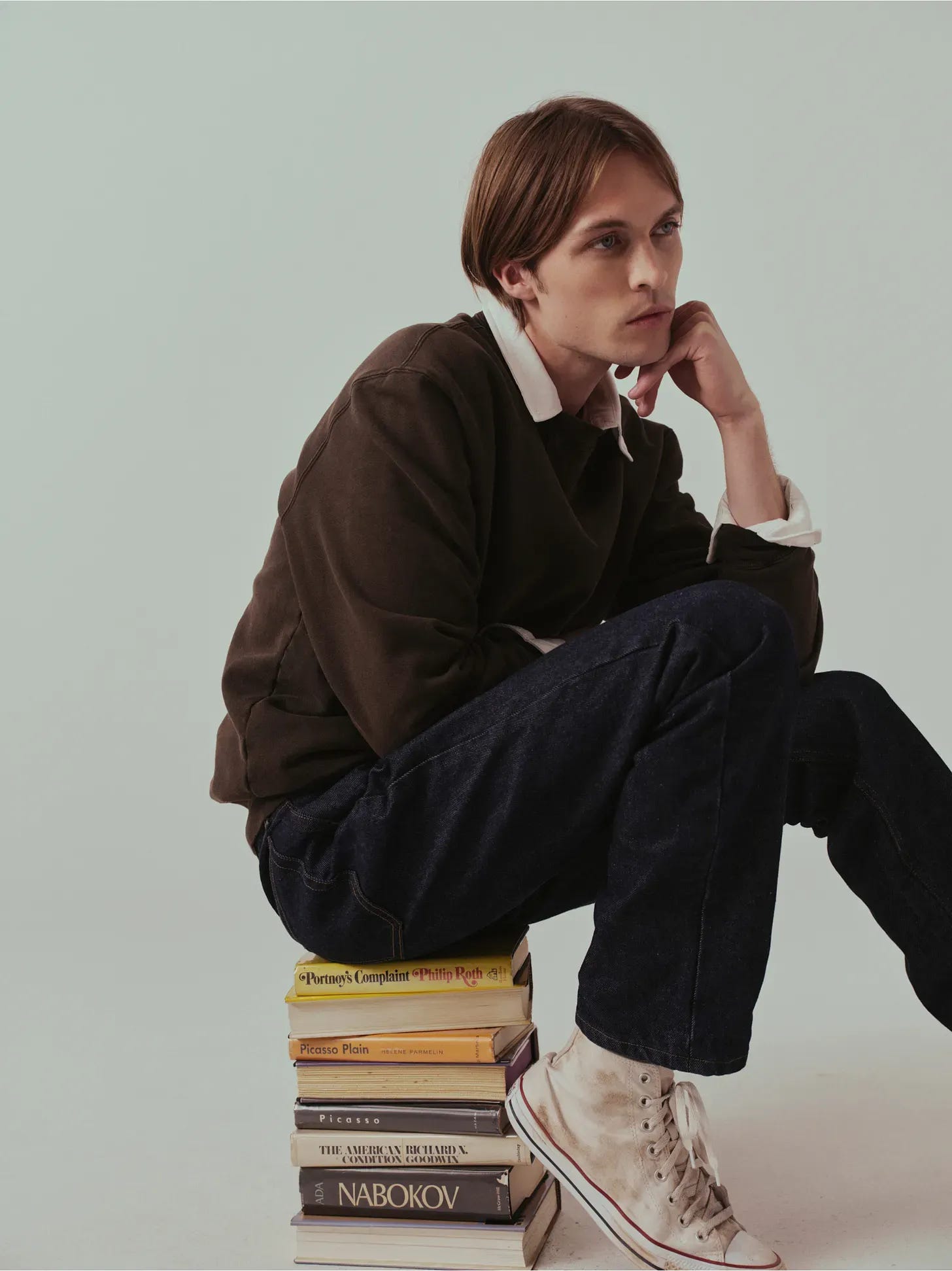
“There’s something nice about how dirty it was, and how beat up it was. Like wrinkles on someone’s face. You can only get that through experience and time.”
A creative director said this to me recently, talking about a pair of Converse Chuck Taylors he saw in Hanover’s look book.
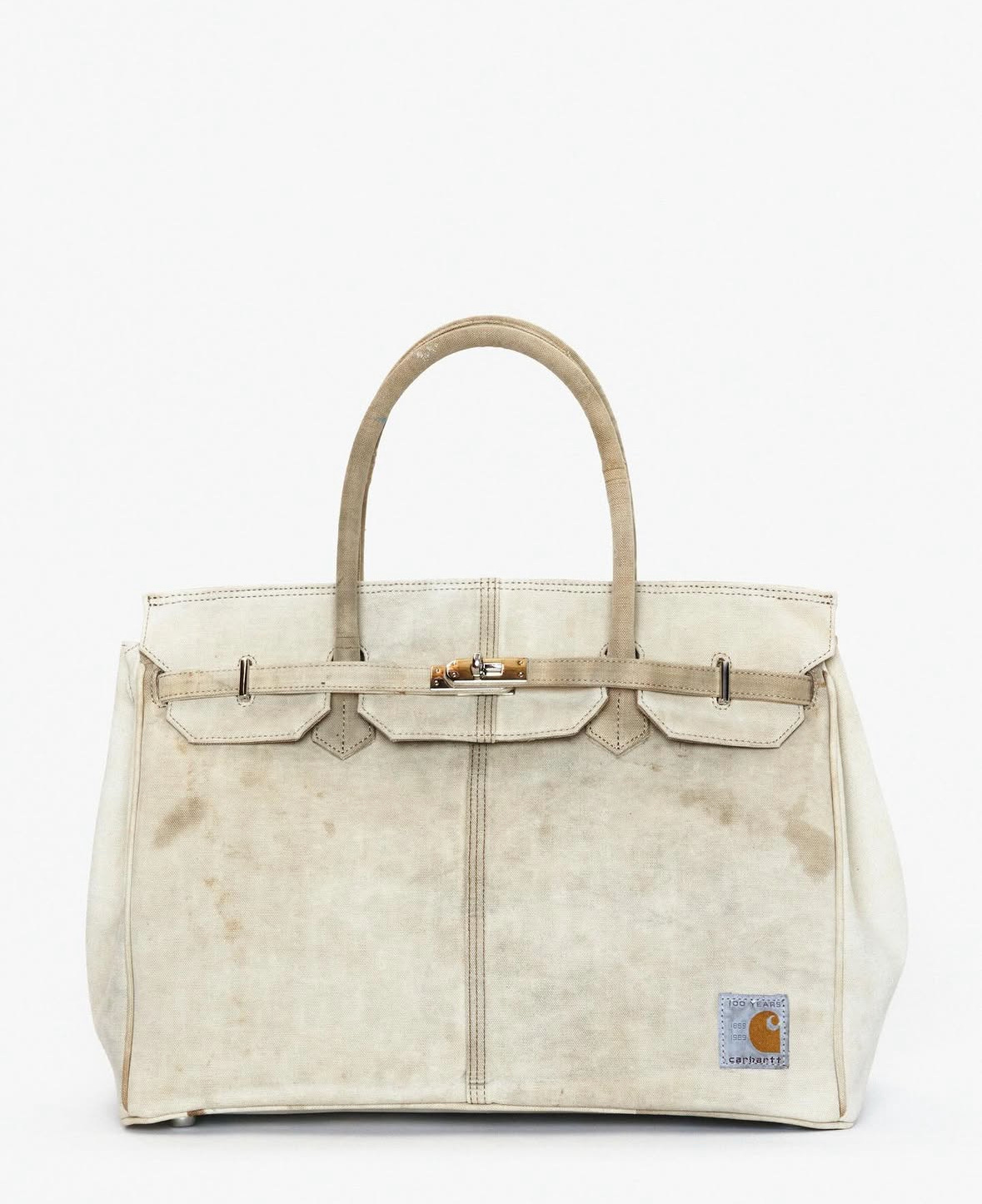
Yesterday I came across an image of a heavily worn, dirt-marked canvas Birkin with a Carhartt patch on it. It reminded me of this quote and made me think about how we are starting to see a swing away from quiet luxury towards grimy, lived-in, patina aesthetics.
Recent trend pieces I’ve read on the return of grunge style mostly highlight the source of influence as the 90s because it’s the closest available shorthand. But what’s happening now feels more specific than nostalgia alone. The aesthetic gaining ground is less Kurt Cobain and more a compound of faded Japanese denim, cracked leather, oxidized silver, washed-black everything, oversized knits with visible wear, military and workwear references, and old band-shirt textures.
Think: Archival vintage crossed with distressed luxury crossed with a deliberate refusal of perfection.


You can see it everywhere right now; even in products designed to arrive already carrying the visual language of wear. Satoshi Nakamoto’s new Vans Era 95 ‘Gems’ release comes pre-ripped and torn, with exposed foam, distressed black canvas, and heavily hand-worked detailing. Autry, meanwhile, simply names the condition outright: their new Reelwind silhouette is called the Super Vintage, a new shoe sold as already weathered. The value proposition across both is no longer pristine newness. It’s simulated history.
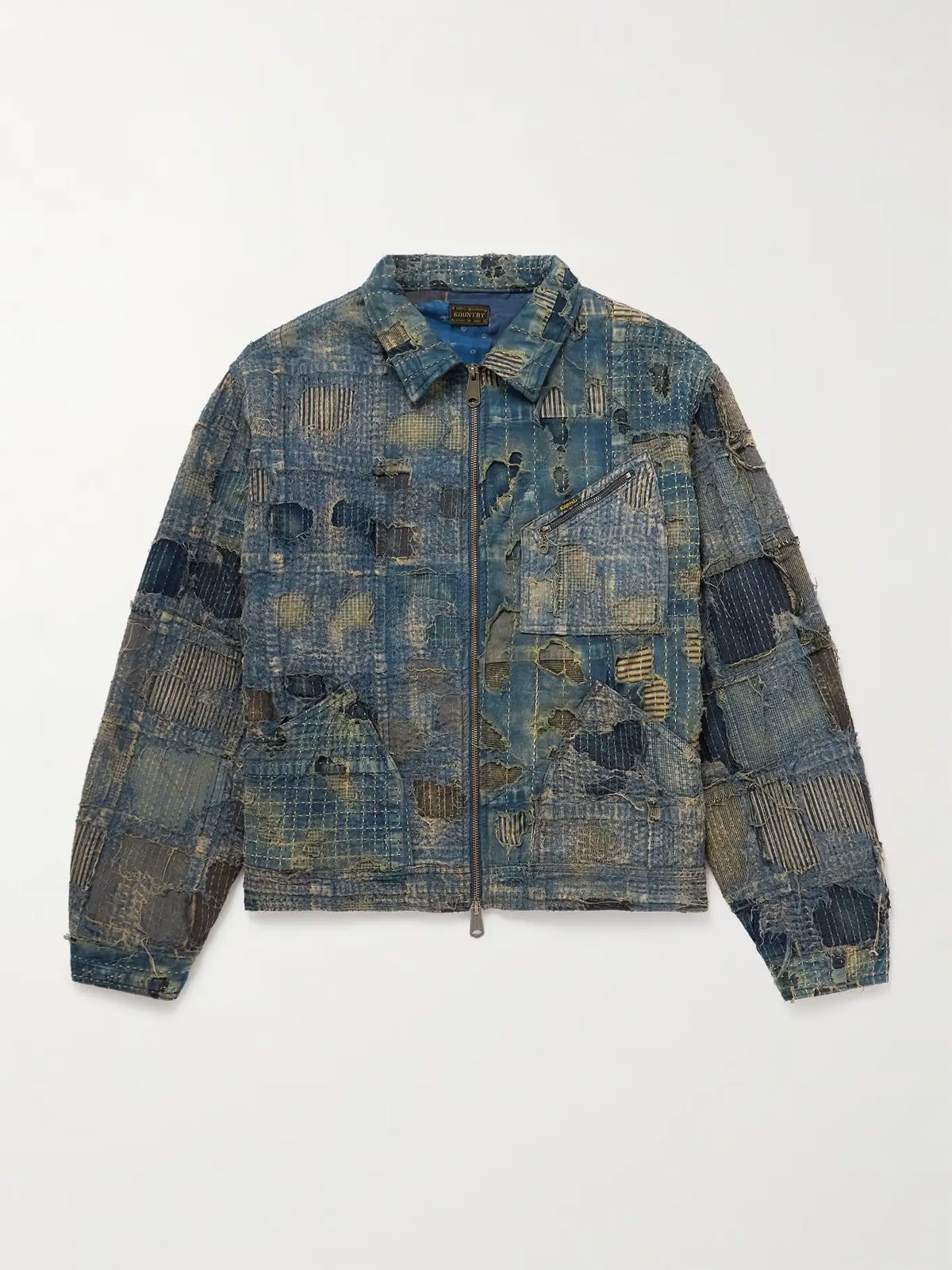
At the other end of the same spectrum, Kapital’s boro patchwork denim has moved from cult Japanese label to Mr Porter fixture; a tradition rooted in repairing cloth until the repairs themselves become the object, now finding a mainstream audience that instinctively understands the value of that.

And then there is Prada. Miuccia Prada and Raf Simons recently presented garments deliberately marked with stains, discolouration, and iron burns as part of its Men's FW26 show.
Although these worn details may seem strange at first, they were intentionally designed to communicate something meaningful. The stains, faded colours, and creased fabrics all representing the effects of time whilst simultaneously rejecting the pressure to appear flawless. In its press release, Prada explains that clothing “carries impressions of life,” emphasising the value of time and memory, while suggesting that remembering the past is itself a form of cultivating taste.
Part of the reason, I think, is trust.
People increasingly distrust things that look too new, too frictionless, or too optimised. Patina communicates time, friction, and human use. Wear is proof that something existed in the world before it reached you. In a culture saturated with AI-generated imagery and algorithmically optimised products, that proof is becoming scarce and therefore valuable.
There is also a class inversion at play here. As Eva Streit, the Co-Founder of Global Urgent Trends observed recently: “Having to mend your clothing and wear it for a long time used to be an indicator of poverty. Now it has become a luxury code.”
The more industrial systems perfected replacement, the more maintenance itself became a visible form of time expenditure and therefore status.
For most of human history, the luxury object was the new one. Now having the taste and patience to invest in things that age well, to repair rather than replace, and to wear something until it carries your history — that has become its own form of status. Not because it is cheap, but because it signals a relationship with objects that the consumer economy has spent decades trying to eliminate.
In a culture built around acceleration and replacement, objects that visibly record time begin to feel almost emotionally stabilising.


Brand strategist Viktor Wendt put it well: “In a way, this really feels like the next logical evolution after quiet luxury: if the old flex was signalling subtle cultural capital through logo-less clothing, the flex now seems to be wearing clothes with patina that show you’ve had the taste for long enough that you simply don’t care as much anymore.”
Grunge rejected aspiration. This redirects it. People still care deeply about quality and provenance; they just want those qualities expressed through real products which carry the marks of a real experience. As one vintage dealer noted in a recent piece in the New York Times, “there is just this insatiable hunger for uniqueness.”
AI can generate a perfect image.
It cannot generate a history.
Please absolutely continue this series! This is a fascinating breakdown.
If you're looking for the next addition, I would love to see you explore how this hunger for history and uniqueness is completely shifting the way indie labels launch through crowdfunding and private pre order drops.
Because consumers now value 'provenance over pristine newness,' independent designers are using 30 day funding campaigns to sell the story and the raw craftsmanship of a collection before a single stitch is made. It completely flips the traditional fashion model the community funds the production run upfront, which eliminates mass-produced warehouse waste and guarantees that every piece has a deliberate, slow-fashion purpose from day one.
I map out these 3 step launch frameworks specifically for apparel brands to help them fund production runs risk-free. Victoria, as you watch these luxury houses simulate history, do you think independent creators using community driven pre orders have a better shot at capturing that authentic 'human touch' people are craving?